About us

Home   /   Arya Edigas

Edigas History


Attempts have been made to trace the origin of Idiga community to history and mythology. There are references in Mahabharata, Ramayana, Skanda Purana and Matsya Purana. We are also said to be ancient community, historically. The history dating back to Chandragupta, Pratapa Rudra, Vijayanagara empire, Aurangazeb, Basaveshwara, Adi Shankaracharya and others records the existence of the Idiga (Gowda Vamshasta) community. History and mythology project Idigas to be of Gowda Vamshasta origin. The community has now its presence across the globe under varied names. There are more than 26 sub-sects of Idigas with diverse language, culture and tradition in Karnataka alone. However, they have a common avocation. Idigas are estimated to be in the fourth place in terms of their numbers. The government has included all the 26 sub-sects in the list of Backward Classes.

The community’s name - Gowdaru, Gowlaru or Idigaru – can be traced to the birth of its progenitor. Mythology says the progenitor took birth under the influence of ‘Gowda Mantra’ of Atri Maharshi, a sage. Varunidevi (the heavenly elixir), the daughter of Varuna (the God of Wind)  is their deity. Atri Maharishi embodied Kaundinya through Gowda Mantra. Sage Kaundinya, with his powers created fruit-yielding trees, herbs and the concoction of ‘Somarasa’ to help mankind get rid of all the disease. Thus Kaundinya became the progenitor of Idiga community and Idigas derive their Gotra, (Kaundinya Gotra) from this sage. Further, the sage, through his ‘tapas’ obtained a promise from Lord Eshwara that those consuming the elixir shall have no rebirth.

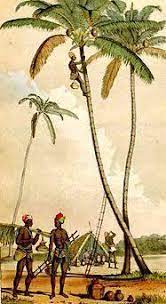
‘Rudrabharata’ has a legend relating to the Idiga community. Lord Eshwara and his consort Parvathi were once on a jolly ride to Bhooloka (the abode of human beings). It was a hot summer day and Parvathi felt thirsty. The couple from Devaloka (the abode of Gods) found a cluster of toddy and wild date trees. Parvathi suggested she could quench her thirst with the juice from the stems of these trees. Meanwhile, Lord Eshwara found a bangle seller coming on the way. He asked the seller to extract the juice from the stems of the trees and gave him a sharp weapon for the task. The bangle seller complied. Satisfied with the service, the couple blessed him to continue the profession of extracting juice from the trees and that his future generation would prosper in the profession. Idiga community came into existence from that day. There is a reference in the book, Castes and Tribes of Southern India that this incident occurred in Goruru (place of Goravas) in Hassan district.

“Brahmanotpatti Marthanda” has one more legend relating to the origin of Idiga community. The king Jananamejya performs a yajna by inviting sage Vateshwara. The king gifts a village to each of 1,444 disciples of the sage. They all came to live in Aryavartha and became Adigowda. The legend says the same people later became progenitors of Gowda Vamsha. There are also references in some puranas that Idigas were Brahmins earlier and ostracized by the Brahmins, who had deviated from their dharma.

Gopavashwa and Kalyani couple, who were the descendants of sage Kaundinya got a son by name Gopalagowda. He married a girl by name Veeramambe and the couple begot a son, Katamagowda. This Katamagowda was an ardent devotee of Lord Eshwara and is the Guru for the Idiga community. He is also known as Kantamaya, Katamaya, Katamagowda and Katamaheshwara (Shivatatvasara – Shivanandeeshwara dialogue). Gopalagowda ruled Vidarbha and renounced the world in his old age. He went to Himalaya for tapas. Katamagowda took over the reins of Vidarbha. With his divine powers, Katamagowda made toddy and other trees touch the earth’s surface and thus became responsible for the profession of people tapping the juice from their stems.
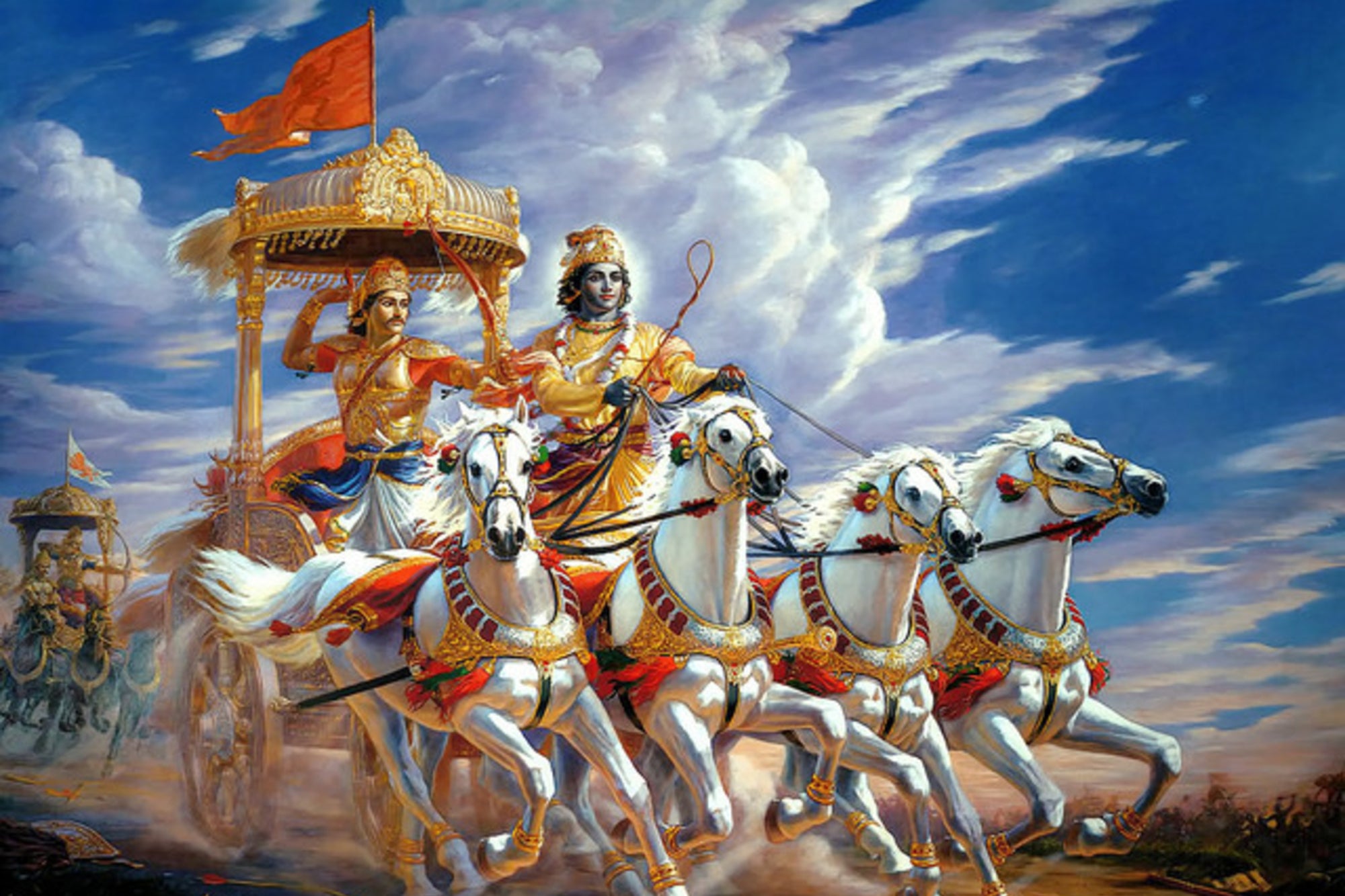
With the intention of immortalize his progenitor sage Kaundinya, Katamagowda installed a linga brought from the Himalayas in Muktapura ( a village now in Ananthpur district) and constructed a temple with 18 enclsoures. He also set up a ashrama and named it Kaundinya ashrama. Katamagowda later started to reside at the ashrama and came to be known as Katama Maheshwara and Katama Rusheeshwara. He penned Shivaleela Mahatme, Shivatatava Saara and other works there. In his old age, Katamagowda entrusted the responsibility of the kingdom to his relative Veerabhoja and left for the Himalayas to secure Moksha, leaving his 3,000 disciples in the ashram. (Few books opine Katamagowda’s period to be the initial years of Kaliyuga, after the completion of the Great War of Mahabharata)

Idigas are referred to as Devagowdas in Krutayuga, Adigowdas in Tretayuga, Shivagowdas in Dwaparayuga and Satyagowdas in the beginning of Kaliyuga. There is also an anecdote saying that Adi Shankaracharya, before entering the house of Mandanamishra, obtained the upadesha of Gowda Mantra from a Idiga. However, all these facts are mythological and not based on any scientific inquiry. They have to be considered only for the sake of a mythological background for the community.

It is said that the tapping and sale of arrack was streamlined during the rule of Chandragupta. The responsibility was entrusted to three Idigas by name Narayanagowda, Shankaragowda and Vinayakagowda. The three were most influential, rich and religious people of the time. History also says that Sri Krishnadevaraya had gifted (inam) a village by name Halepyka. (There is also a mention that it happened during the rule of Rajagopla Krishnaraya). There was a separate section of Idigas in the state army during the rule of Proudhadevaraya. They were called as Dandu Idigas and their duty was to supply toddy to the soldiers, both during peace and war times. When necessary, they used to fight also. Several Idigas occupied top posts in the army.

During the twelfth century reformation movement heralded by Basavanna, an Idiga by name Maraiah is said to have become a close associate of Basavanna, preaching his principles. Sarvayi Papanna, an Idiga born in Belgaum organized youth of the community, acquired war skills and attacked a Muslim kingdom. He was bestowed the title Sardar Papareya.

It is said that Moghul emperor Aurangazeb (1628 AD) invited the leaders of Idiga community from Andhra Pradesh to his court and learnt the technique of preparing quality toddy.

Thus, considering the mythological and historical background of Idigas, Halepaika, Billava, Namadhari communities, it is evident that our ancestors imbibed the characteristics of the four varnas  (castes) – philosophical attitude of Brahamans, Kshayatriya sprit of fighting, Vysya character of trade through toddy business and the Shudra symbol of service, up to 12th century. However, the later period turned out to be a catastrophe for the Idigas. The community, bogged down in illiteracy and blindfaith, became subject of exploitation of upper classes.

Efforts of Awareness


Narayana Guru was born into an Ezhava family in Chempazhanthi near Thiruvananthapuram in Kerala, in the year 1854. His social reformations with spiritual foundation ushered in an era of progress for the Billava community. The Guru laid the foundation for a Shiva temple at Kudroli in Mangalore in 1908 exclusively for Idiga, Billava, Namadhari and other communities which had no entry to other temples. He installed a Shivalinga in 1912. It became the first temple in Karnataka with access to all the ‘untouchables.’ It is now famous as Kudroli Sri Gokarnanatheshwara temple.

While the seeds of reformation of the Idiga community were sown in 1908 in the coastal area, the measures were launched in Bellary in the northern part of Karnataka in the year 1910. A hostel for the benefit of Idiga students was set up in 1910-11 under the able leadership of Rau Saheb Sri Kanekal Nettakallappa. The strengthening of the community gained momentum with the convention of Karnataka-Andhra Idigas in the near 1927 under the leadership of P N Gowda. The organization of the community was further bolstered with the efforts of K N Guruswamy in 1944-45. A hostel was started in Chikkamavalli of Bangalore. Guruswamy, who was a wealthy person was instrumental in setting up a hostel at Seshadripuram in Banglore, together with Sri K Venkataswamy, a native of Chikkajogihalli, residing in Arasikere.

A massive convention of Idigas was held in Bangalore on November 9, 10 in 1958. The then Rajpramukh, Sri Jaychamarajendra Wodeyar inaugurated the convention. The historic convention witnessed the declaration that Idiga Sangha would be the central association of people spread over Idiga, Billava, Namadhari, Deevaru, Eliga communities. The Sangha was renamed as Mysore Pradesha Arya Idiga Sangha. Later, the then chief minister of Kerala and a disciple of Sri Narayana Guru, R Shankar took part as the chief guest in the convention held at Mysore in 1961.

The third convention was held at Bangalore Palace Grounds in 1995 under the chairmanship of H R Basavaraju.

Idiga community, in fourth position in terms of population of the State has achieved political, financial, social, educational and religious progress. However, the community has not grown as a collective force. Despite a declaration that the community known by various names is one and the same, we are yet to bring it into effect. While the political personalities of the community have come together whenever necessary, the community is yet to organize itself socially. Karnataka Rajya Arya Idiga Sangha is now (2010) led by enthusiastic persons like J P Narayanaswamy, D Dasappa, M Thimmegowda and G K Obaiah. As a mark of unity of the Idiga community, the Sangha, in consultation with the leaders of all the sects, has set up a Gurupeeta, a temple of presiding deity Renuka Yallamma Devi and educational institutions, hostel at Soluru, 40 km from Bangalore.

Ezhavas


Narayana Guru was born into an Ezhava family in Chempazhanthi near Thiruvananthapuram in Kerala, in the year 1854. His social reformations with spiritual foundation ushered in an era of progress for the Billava community. The Guru laid the foundation for a Shiva temple at Kudroli in Mangalore in 1908 exclusively for Idiga, Billava, Namadhari and other communities which had no entry to other temples. He installed a Shivalinga in 1912. It became the first temple in Karnataka with access to all the ‘untouchables.’ It is now famous as Kudroli Sri Gokarnanatheshwara temple.

While the seeds of reformation of the Idiga community were sown in 1908 in the coastal area, the measures were launched in Bellary in the northern part of Karnataka in the year 1910. A hostel for the benefit of Idiga students was set up in 1910-11 under the able leadership of Rau Saheb Sri Kanekal Nettakallappa. The strengthening of the community gained momentum with the convention of Karnataka-Andhra Idigas in the near 1927 under the leadership of P N Gowda. The organization of the community was further bolstered with the efforts of K N Guruswamy in 1944-45. A hostel was started in Chikkamavalli of Bangalore. Guruswamy, who was a wealthy person was instrumental in setting up a hostel at Seshadripuram in Banglore, together with Sri K Venkataswamy, a native of Chikkajogihalli, residing in Arasikere.

A massive convention of Idigas was held in Bangalore on November 9, 10 in 1958. The then Rajpramukh, Sri Jaychamarajendra Wodeyar inaugurated the convention. The historic convention witnessed the declaration that Idiga Sangha would be the central association of people spread over Idiga, Billava, Namadhari, Deevaru, Eliga communities. The Sangha was renamed as Mysore Pradesha Arya Idiga Sangha. Later, the then chief minister of Kerala and a disciple of Sri Narayana Guru, R Shankar took part as the chief guest in the convention held at Mysore in 1961.

The third convention was held at Bangalore Palace Grounds in 1995 under the chairmanship of H R Basavaraju.

Idiga community, in fourth position in terms of population of the State has achieved political, financial, social, educational and religious progress. However, the community has not grown as a collective force. Despite a declaration that the community known by various names is one and the same, we are yet to bring it into effect. While the political personalities of the community have come together whenever necessary, the community is yet to organize itself socially. Karnataka Rajya Arya Idiga Sangha is now (2010) led by enthusiastic persons like J P Narayanaswamy, D Dasappa, M Thimmegowda and G K Obaiah. As a mark of unity of the Idiga community, the Sangha, in consultation with the leaders of all the sects, has set up a Gurupeeta, a temple of presiding deity Renuka Yallamma Devi and educational institutions, hostel at Soluru, 40 km from Bangalore.

Latest


The word Idiga or Ediga is 'people of Ida or Eda' respectively, are believed to be an ancient Kannada name for Sri Lanka in one of the sources. The word Deevaru might have come from the Sanskrit word Dweep means island which again denotes the island nation of Sri Lanka. Another theory is that the word Eda or Ida is derived from archaic Kannada word ira for toddy. Our population is said to be about 4 million. Yellamma Thaayi is the community deity.

Edigas or Idigas is a Hindu toddy tapper community in Karnataka, Telangana and Andhra Pradesh.

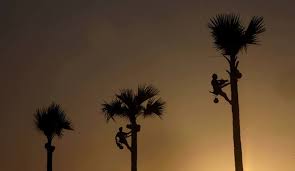
The traditional occupation of Idiga people was that of toddy tapping. They are mostly concentrated in the Malenadu and Shivamogga districts. Similar but culturally distinct toddy tapping communities, called the Billava and Deevaru, exist in Dakshina Kannada and southern Karnataka, respectively. There had been attempts to cause these various communities to cohere politically but these had petered out by the 1980s.

The Idiga were categorised as an Other Backwards Class (OBC) in the 1980s, when they constituted around 2.5 per cent of the population in Karnataka. Despite their low numbers, eleven Idiga people were elected as Members of the Legislative Assembly in the 1985 elections, making them the largest single OBC group in the Legislative Assembly of Karnataka. They had six Members in 1978 and eight in 1983. They remain a significant political force and were described as a part of the AHINDA bloc that significantly helped the Indian National Congress party in the 2013 Assembly elections.

Significant number of Idigas have become very wealthy and powerful by extending their involvement in toddy tapping to that of excise contracting, distilling and brewing on contract to large businesses, but the economic base of the community remains limited mostly to that of liquor. Idigas of Neeravari Pradesh of Karnataka own large number of fertile land making them earn large source of income. Politicians such as Sarekoppa Bangarappa, themselves of the toddy-tapping community, have been able to use the support of these prosperous people.[8]

Idiga also practised bone-setting and, together with some members of the Vokkaliga community, are relatively dominant in that field.

Arya Idiga is a Hindu community of people distributed mainly in Karnataka, Andhra Pradesh and other parts of India. Idigas were known as Somavanshi Kshatriyas as they were involved in developing Soma and Ayurvedic medicine in ancient days. In coastal regions of Karnataka, they are known by various names such as Billava, Namadhari, Deevaru, Halepaika, Namadhari Naik and Thiyya.

They are mainly spread over cities like Bangalore, Chikmagalur, Chitradurga, Shimoga, Uttara Kannada, Udupi, Dakshina Kannada, Hassan, Mysore and Tumkur districts. Idigas are referred to as Devagowdas in Krutayuga, Adigowdas in Tretayuga, Shivagowdas in Dwaparayuga and Satyagowdas in the beginning of Kaliyuga. Mythology says the progenitor took birth under the influence of ‘Gowda Mantra’ of Atri Maharshi, a sage. The community’s name - Gowdaru, Gowlaru or Idigaru – can be traced to the birth of its progenitor.

Narayana Guru is one of the great personalities that India has ever seen. He carried the message: “Don’t ever ask, think and speak on caste. One caste, One religion, and One God for mankind.” Narayana Guru called for eradication of the caste system from the pedestals of temples. He stood against unnecessary and meaningless rituals in the name of religion and uprooted blind beliefs such as animal sacrifice, which was widely prevalent at that time. He also introduced simple pooja methods, accessible to ordinary people. This helped to bring all the people in the community together.